Reimagining nostalgia through minimalist interaction and emotional gameplay
Overview
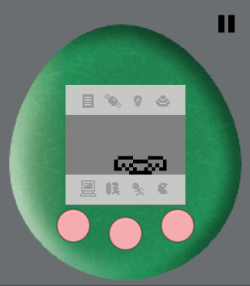
The Dragon Virtual Pet is a retro-inspired virtual pet simulator developed in Unity. It captures the charm of classic devices such as Tamagotchi and Digital Monster, blending familiar aesthetics with deeper gameplay systems that encourage long-term engagement. Using a simple three-button interface (A, B and C), players care for a dragon, guide it through growth and evolution, and build a meaningful connection through consistent interaction and attention.
This project explores how minimalist design and nostalgic visuals can create emotionally resonant experiences without the need for modern graphics or complex controls.
Design Philosophy
The aim was to emulate the tactile, low-resolution experience of LCD pets while introducing meaningful progression and engaging gameplay systems. Influenced by Donald Norman’s usability principles and Celia Hodent’s research on player motivation, the game prioritises clarity, habit-building, and emotional reward. Every element of the interface, from sprite movement to menu highlights, is designed to communicate game states and feedback clearly.
Key Gameplay Features
Three-Button Interface
- A: Cycle through menu options
- B: Confirm selection
- C: Cancel or return
LCD-Inspired UI
A 32×16 pixel display housed within a plastic shell interface that emulates 1990s virtual pet devices.
Evolution System
The dragon evolves over time, influenced by player care, actions and age.
Pet Needs
Players monitor and manage hunger, happiness, energy, health and weight.
Adventure Mode
Explore tile-based zones with random battles and event-driven progression.
Battle System
A timing-based attack mechanic, triggered by screen-wide alerts.
Audio Feedback
Simple beeps convey hunger, hatching, stat changes, and menu navigation cues.
Technical Highlights
- Developed in Unity using pixel-perfect rendering and custom camera scaling
- Three-button input system designed for intuitive interaction
- Modular stat and evolution systems built for future expansion
- Sprite-based animations reflect the dragon’s internal emotional states
- Lightweight tile system supports adventure exploration and combat
What I Learned
This project enhanced my understanding of simple yet engaging interaction design. I explored how to convey game systems using minimal UI, and how to use audio and visual timing to build emotional bonds between players and characters. It also taught me how to work within tight visual constraints to deliver a clear, satisfying user experience.
Future Improvements
- Add more evolution paths based on player behaviour
- Expand adventure zones with procedurally generated elements
- Introduce personality traits that affect the dragon’s behaviour
- Improve the battle system with elemental types or tactical modifiers
 Saif Ahmed